


Are We Becoming More Intelligent, but Less Human?
Artificial intelligence, human evolution and the future we are choosing to create.
By Mikhaël Akasha
This week, while leading the Future-Proof Business Models module of the Executive MBA at Maastricht University, I found myself reflecting on a question that has been growing within me for some time. As artificial intelligence becomes increasingly capable of thinking, analysing and making decisions on our behalf, what is happening to our own development as human beings?
Throughout the week, we explored how organisations can become more resilient, sustainable and better prepared for the future. We examined changing business models, geopolitical developments, circularity, innovation and the growing influence of artificial intelligence. It was an inspiring module, with engaged participants and contributions from people who are actively shaping these developments in practice.
One of the things that struck me most was the extraordinary progress being made in AI. During a session led by Ton Geurts, with a contribution from Crowdfox, we explored how artificial intelligence is transforming procurement and supply chain management. The applications went far beyond the familiar use of AI for writing, summarising or searching for information. We saw how intelligent systems can support complex purchasing decisions, identify patterns across vast amounts of information, improve risk assessments and help organisations manage increasingly complicated value chains.
The implications for business are enormous. I can see how these capabilities could fundamentally change the way organisations conduct due diligence, evaluate strategic options and prepare for future developments. Activities that previously required considerable time, specialist expertise and coordination can increasingly be supported by systems capable of processing and connecting information at remarkable speed.
For organisations trying to navigate geopolitical uncertainty, environmental challenges and rapidly changing markets, this could represent a genuine step change. I left these discussions feeling inspired by what is becoming possible. At the same time, I found myself wondering whether our ability to develop increasingly intelligent systems is being matched by an equally fundamental development in ourselves.
We seem to be making extraordinary progress in extending our intellectual capabilities, but are we making the same progress in wisdom, compassion, integrity and our ability to live in harmony with one another? And if not, what exactly are we accelerating?
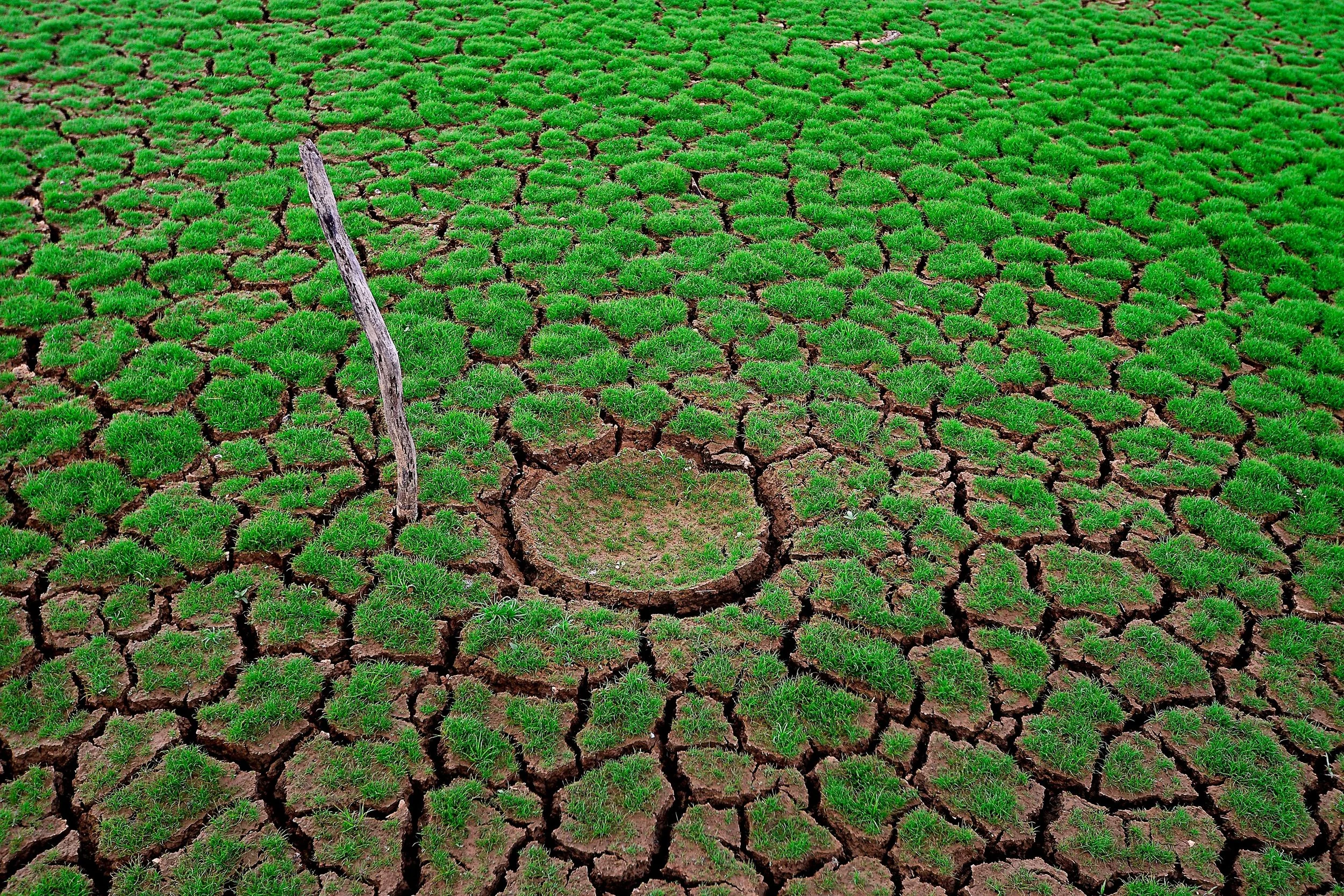
The world we have created.
In my work with leaders and organisations, I often return to the relationship between the world we have created and the assumptions that gave rise to it.
Our modern civilisation is the result of remarkable human ingenuity. We have developed technologies that connect continents, medical innovations that save lives and economic systems that have brought opportunities and prosperity to millions of people. There is much to appreciate in what humanity has accomplished.
Yet we also find ourselves living with the consequences of the same systems. We face ecological degradation, the depletion of natural resources, growing social divisions and an increasing sense of disconnection from ourselves, each other and the natural world.
This is one of the central themes I explore through a worldview that can be extraordinarily successful and still reach its limits. What once enabled progress may eventually become an obstacle to further development.
When we look at the world through the lens of efficiency, growth and competition, we naturally develop solutions that reinforce those priorities. We become exceptionally good at producing more, moving faster and extracting greater value from the resources available to us. But we do not always question whether these activities contribute to the quality of life we wish to create.
Artificial intelligence is entering this world, with all its possibilities and contradictions. It is tempting to imagine that more sophisticated intelligence will automatically lead to better outcomes. Yet AI does not exist independently of the human systems in which it is developed and applied. It is shaped by our intentions, economic incentives, assumptions and definitions of success.
If we use AI primarily to increase consumption, accelerate production and maximise short-term financial returns, we may simply become much more effective at reinforcing the patterns that have brought us to our current situation.
This is why I believe the discussion about artificial intelligence needs to reach beyond technological capability. We need to examine the worldview guiding its development and the values shaping the decisions we make with it.
Otherwise, we risk using the most advanced technologies in human history to perpetuate ways of thinking that are increasingly inadequate for the future.
What are we actually trying to sustain?
Another contribution during the MBA came from Chris Stretton of the Maastricht Sustainability Institute, who explored circular business model innovation and the transition towards more sustainable forms of value creation.
His session brought attention to a question that I consider fundamental. What does it really mean for a business to create value?
Traditionally, we have evaluated business models largely through their ability to generate revenue, maintain profitability and deliver returns to shareholders. These remain important considerations, but they provide only a partial understanding of the effects an organisation has on the world.
A business creates consequences far beyond its financial statements. It influences the wellbeing of employees, the relationships within supply chains, the communities in which it operates and the ecological systems upon which it depends.
Circular business models encourage us to consider how materials and products can remain valuable for longer, how waste can be prevented and how organisations can move away from the assumption that economic activity must continually consume more resources. Regenerative thinking takes this further by asking whether our activities can actively contribute to the restoration and flourishing of living systems.
Artificial intelligence could play an important role in this transition. It can help us understand complex material flows, identify inefficiencies, assess environmental impacts and explore new ways of organising economic activity. It may allow us to recognise relationships that would otherwise remain hidden and make more informed decisions about the consequences of our actions.
But the question of what we wish to sustain remains ours to answer. We can use AI to make an unsustainable business model more efficient, or we can use it to question the business model itself. We can optimise a supply chain for the lowest possible cost, or we can consider how that supply chain affects the lives of the people and ecosystems within it.
Both approaches may be technologically sophisticated, but they emerge from very different intentions. Perhaps future-proofing should therefore begin with a more fundamental question. Are we simply trying to ensure that our organisations continue to exist, or are we helping create a world in which life can flourish?
A business may become more resilient while the society and ecological systems surrounding it become increasingly fragile. In that case, we need to question what we mean by resilience.
I believe an organisation is truly future-proof when its continued existence contributes positively to the future of the wider world.
Are we gradually giving away our humanity?
There is another dimension to artificial intelligence that I find equally important, although it receives less attention in discussions about business and innovation. As AI becomes increasingly integrated into our daily lives, we are beginning to outsource activities that have traditionally played an important role in our personal development.
We use AI to formulate our thoughts, write messages, interpret information, generate ideas and help us make decisions. Much of this can be genuinely useful. I use these technologies myself and appreciate the possibilities they offer. Yet I wonder what happens when we gradually become less involved in the processes through which we develop our own understanding.
Thinking is not simply a means of arriving at an answer. It is also how we learn to question our assumptions, recognise uncertainty and develop discernment. Writing can help us discover what we truly think or feel. Meaningful conversations allow us to encounter perspectives different from our own and develop empathy through the experience of another person. Even the discomfort of not knowing can be valuable. It invites us to remain curious, patient and open to possibilities that may not immediately present themselves.
When our thoughts can be effortlessly expressed by a machine, we may spend less time finding our own voice. When increasingly sophisticated systems recommend what we should do, we may gradually lose the habit of examining our own intentions and taking responsibility for our choices. Of course, none of this is inevitable. AI can also stimulate curiosity, deepen learning and expose us to ideas we might never have encountered otherwise.
What matters is the nature of our relationship with it. Are we using artificial intelligence to expand our own capabilities, or are we becoming dependent on it in ways that weaken them? Are we creating more space for reflection, creativity and human connection, or are we simply filling every moment with additional activity?
I sometimes wonder whether the greatest challenge is not that machines will eventually resemble humans, but that humans may gradually begin to resemble machines. We may become more efficient, predictable and productive while losing touch with the sensitivity, spontaneity and depth of experience that give our lives meaning.
There is something deeply human about being uncertain, vulnerable, imperfect and still willing to engage with life. These qualities are not necessarily weaknesses to be overcome. They are often the very conditions through which compassion, creativity and wisdom emerge.
The importance of becoming virtuous human beings
Central to our lives are human values: Truth, Right Conduct, Peace, Love and Non-violence. These values invite us to look beyond intellectual knowledge and consider how we actually live.
We may possess extraordinary knowledge and still act without integrity. We may understand the consequences of our behaviour and continue to cause harm. We may have access to almost unlimited information while remaining disconnected from our own inner lives.
Knowledge alone does not make us wise, just as technological progress does not automatically make us more compassionate.
The cultivation of virtue requires something more personal. It asks us to become aware of our thoughts and intentions, to recognise the effects of our behaviour and to bring our actions into greater alignment with the values we hold.
Truthfulness becomes meaningful when we are willing to speak honestly, even when doing so is uncomfortable. Compassion develops when we open ourselves to the suffering or needs of another. Peace is cultivated through the way we relate to ourselves and respond to the world around us.
These qualities develop through experience, reflection and the choices we make in everyday life. This distinction becomes particularly interesting in the context of artificial intelligence. AI can explain the meaning of compassion and generate beautifully written reflections about love. It can help us explore ethical dilemmas and understand different philosophical traditions. But understanding the language of virtue is not the same as living virtuously. An organisation can use AI to produce an inspiring statement about its values, while its actual decisions continue to contradict those values.
The challenge is to cultivate the ethical maturity of the human beings and institutions directing and embody these values.
What would happen if organisations approached the cultivation of integrity, compassion, self-awareness and responsibility with the same seriousness they bring to technological innovation? Perhaps this is where a truly meaningful form of human evolution begins.
From greater intelligence to greater coherence
In working with individuals, leaders and organisations, I have become increasingly interested in the relationship between our inner state and the external systems we create.
We often approach transformation as something that happens outside ourselves. We redesign strategies, introduce technologies, restructure organisations and develop new business models. These interventions can be valuable, but they do not necessarily change the beliefs, behaviours and relationships that shaped the existing system.
An organisation may introduce new sustainability targets while continuing to reward short-term financial performance above all else. A leadership team may speak about trust and collaboration while maintaining structures that encourage competition and fear.
The contradiction between what we say we value and what we actually do creates a form of dissonance. For me, human evolution is not simply about becoming more knowledgeable, intelligent or technologically capable. It is about gradually developing the qualities that allow us to live with greater awareness, integrity, compassion and connection.
It is about becoming more truthful in how we relate to ourselves and others. It is about recognising that our wellbeing cannot be separated from the wellbeing of the communities and ecosystems of which we are part. It is about learning to act not only from personal interest, but from a growing awareness of our responsibility towards the whole.
Perhaps artificial intelligence can help create the conditions for this development. By taking over repetitive tasks, it may offer us more time for creativity, contemplation, relationships and meaningful work. By revealing the complexity of interconnected systems, it may help us recognise the consequences of our choices more clearly.
But these possibilities will only become meaningful if we consciously choose to cultivate them.
There is no guarantee that greater efficiency will lead to greater wellbeing, or that more information will make us wiser. We must decide what we wish to do with the capabilities becoming available to us.
I would love to see a future in which artificial intelligence supports humanity in becoming more deeply human. A future in which technological sophistication is accompanied by the cultivation of virtue, where innovation strengthens our relationship with the living Earth and where organisations understand their success through the positive contribution they make to life.
Such a future asks something of each of us, in the way we lead, teach, create, work and relate to one another.
If these reflections resonate with you, I would love to hear from you. Let’s connect and explore how we can shape a future in which technology serves our evolution as human beings, deepening our connection with ourselves, one another and the living Earth.